Storification journal
Business storytellingThe Storification framework: five steps to a story people pass on
A five-step storytelling framework for business, from documentary filmmaker Jim Lounsbury: Origin, Worldview, Invitation, Participation, Amplification.

Most storytelling frameworks were built for screenwriters. The hero's journey, the three-act structure and the story circle are brilliant at telling you what happens in a film. They're much less useful when you're a founder trying to work out what to put on your homepage on Monday.
I've spent my career making documentaries in more than 40 countries, then helping start-ups tell their stories. Over that time I noticed the stories that travel all do the same five things, in the same order. I call it the Storification framework.
The Storification framework is a five-step storytelling framework for business: Origin (why you started), Worldview (what you believe), Invitation (how people join you), Participation (how customers become part of the story) and Amplification (how the story spreads).
What is a storytelling framework?
A storytelling framework is a repeatable structure for turning what you know about your business into a story people remember and pass on. A good framework tells you what to say first, what to leave out, and what has to be in place before the next part works.
Most frameworks describe the shape of a single story: a beginning, a middle and an end. The Storification framework describes something different: how a business story grows from one founder's motive into something customers tell for you.
The five steps at a glance
| Step | The question it answers | What you end up with |
|---|---|---|
| 1. Origin | Why did you start? | One true sentence about the moment it began |
| 2. Worldview | What do you believe that others don't? | A "we believe" line a competitor would disagree with |
| 3. Invitation | How does someone join you? | The smallest first step for people who share the belief |
| 4. Participation | Where do customers become characters? | A way for customers to add their own stories |
| 5. Amplification | Why would anyone pass it on? | A story people share because it's about them |
The order matters. Each step carries the next. Skip one and the story can stall.
Step 1: Origin. Why did you start?
Your Origin is the problem you couldn't stop noticing: the moment, the frustration or the conversation that made you build something. It's not your company history. A history is a timeline; an Origin has a turning point.
I've often believed that a great story takes a pain that someone thinks they are feeling alone, and shows it is a struggle that many of us face.
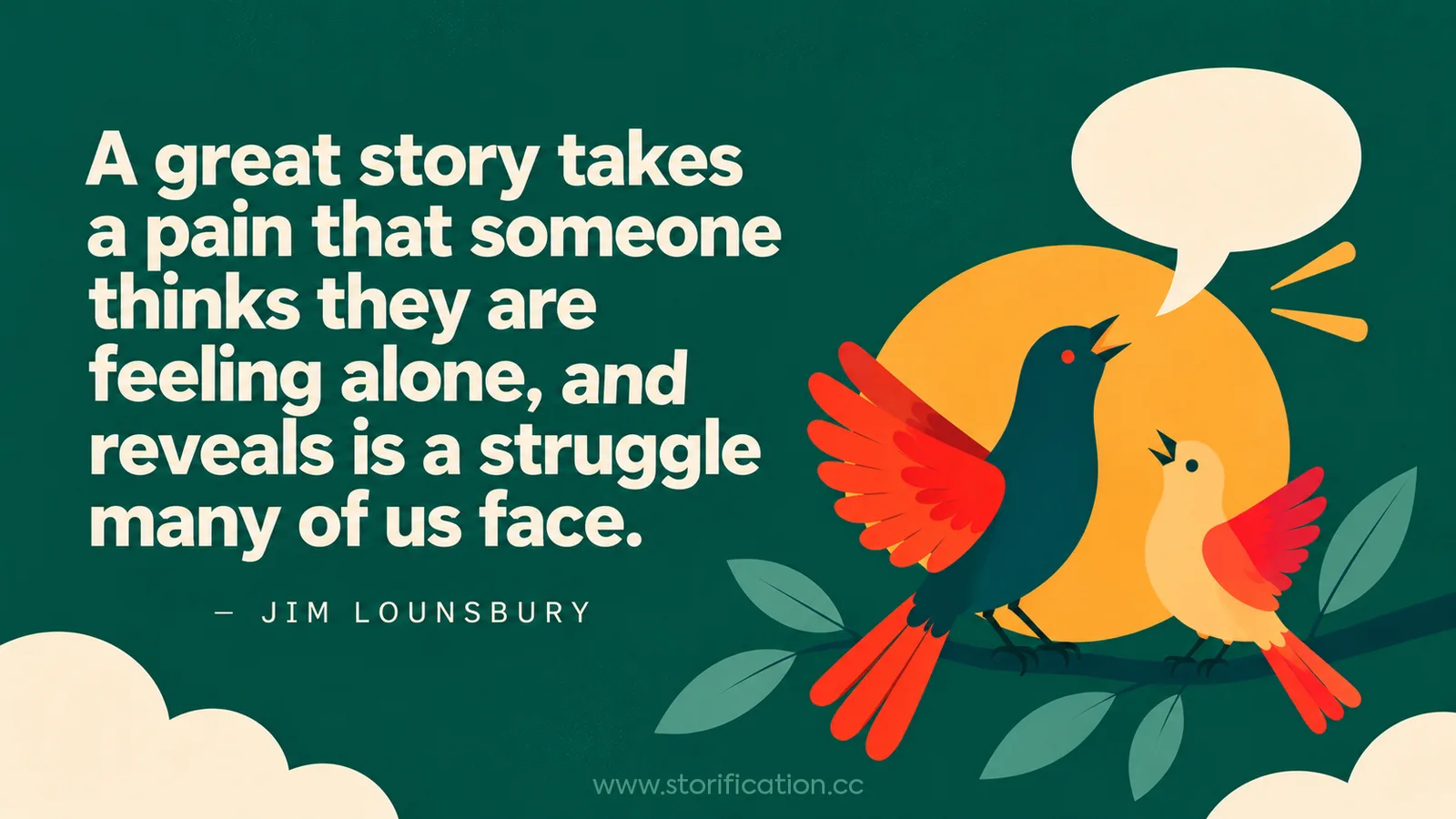
In documentary we rarely open with a thing or a concept. We open with a person, what they want (intention) and what's in the way (obstacle). Your product or service only matters once someone understands the problem behind it, or feels as though it was designed specifically to help them overcome a problem they face.
An Origin does three things a feature list can't. It makes you human, it makes your motive clear, and it gives people a reason to care.
Common mistake: starting with the product, or with a polished mission statement. If it could appear on any company's website, it isn't an Origin.
Try this: finish the sentence "I started this because I couldn't believe that…" Read it aloud. If it sounds like a brochure, go back further, to the actual day.
Step 2: Worldview. What do you believe?
Your Worldview is the belief about the world that sits underneath everything you do. It's what lets a customer say "they're my kind of people" before they've read a single spec.
Patagonia is the clearest example. It doesn't really sell jackets; it sells a view of how we should treat the planet, and the jackets come along for the ride. Its 2011 Black Friday ad in The New York Times told readers "Don't Buy This Jacket". Only a company with a strong Worldview could run that ad and gain customers from it.
A Worldview isn't a demographic; it's a belief profile. People don't buy products, they buy alignment with an identity they already carry.
Common mistake: writing something everyone agrees with. "We believe in quality" is not a Worldview. Nobody believes in the opposite.
Try this: write one sentence that starts "We believe…" that a competitor would disagree with. If they'd nod along, it isn't a Worldview yet.
Step 3: Invitation. How does someone join you?
Worldview on its own is a manifesto. It becomes a story when you add an Invitation: a clear, low-risk way for someone to step into that belief with you.
The shift is from calls to action to calls to identity. "Buy now" asks for money. "If you see the world this way too, here's where you start" asks someone to be a certain kind of person. Great invitations contain a story about who you'll become.
An Invitation can be tiny: a free tool, a pledge, a first conversation, a community to join. The smaller the first step, the more people take it.
Common mistake: making the first step a purchase. Ask for belief before you ask for money.
Try this: write the smallest possible first step for someone who shares your Worldview. That's your Invitation.
Step 4: Participation. Where do customers become characters?
Participation is the point where your customers stop being an audience and become characters in the story. Stories work like campfires, not monologues: people stay when they can add something of themselves.
Common mistake: treating customer stories as testimonials. A testimonial praises you. A customer story shows what changed for them.
Try this: list three customers whose story you'd love to tell. For each, write one line: not what they bought, but what changed.
Step 5: Amplification. Why would anyone pass it on?
Amplification is the story travelling further than any media budget could push it. It happens when people see themselves in the story and want to share it.
Partnerships are the most common way for start-ups and businesses of all sizes to amplify their story. And when your story is being told without you having to pay for it, that's when Storification is working.
As a new production company, we would call up businesses and offer to make them videos in exchange for services that we needed, such as office rent, accounting or equipment rental. On more than one occasion, one of those videos was shared with a companies network and resulted in ongoing work, once even securing us a six figure contract. That's storification at work.
Common mistake: starting here. "We need it to go viral" is the most common brief I hear. Amplification is the result of the first four steps, not a step you can buy.
Try this: look at the last thing your customers shared about you. What was the story in it? Do more of that.
How do the five steps work together?
Think of the five steps as a relay. Origin gives the story a reason to exist. Worldview gives it a direction. Invitation opens a door. Participation fills the room. Amplification happens when the people in the room bring their friends.
That's why the order matters. A brand with a strong Worldview but no Invitation gets admired and ignored. A brand that asks for Participation before people believe anything gets polite silence. And no amount of ad spend amplifies a story nobody has joined.
How is it different from the hero's journey or StoryBrand?
The hero's journey describes the shape of a single story. StoryBrand, Donald Miller's framework, uses that shape to write clear marketing messages, with the customer as the hero and the brand as the guide. Both are useful, and many teams use them well.
The Storification framework works at a different level. It isn't a template for one message. It's a map of how a business story grows: from a founder's motive, to a shared belief, to customers who tell the story for you. You can use StoryBrand to write a homepage and Storification to figure out how to get your story told without you (or your homepage) in the room.
How to use the framework this week
- Monday: write your Origin in one sentence.
- Tuesday: write your "we believe" line, and test it on someone who'd disagree.
- Wednesday: design the smallest Invitation you can offer.
- Thursday: call one customer and ask what changed for them.
- Friday: put those four pieces on your homepage, in that order, and watch what people do.
Or let the free Story Engine draft the first three steps for you. Answer a few questions about your business and it writes your Origin, Worldview and Invitation in about five minutes.
Frequently asked questions
What is a storytelling framework? A storytelling framework is a repeatable structure for turning what you know about your business into a story people remember and share. It tells you what to say first and what has to be in place before the next part works.
What are the five steps of the Storification framework? Origin (why you started), Worldview (what you believe), Invitation (how people join you), Participation (how customers become part of the story) and Amplification (how the story spreads).
What is the best storytelling framework for business? It depends on the job. The hero's journey and StoryBrand help shape a single message. The Storification framework is built for founders deciding what their whole business story should be and how it spreads.
Can a small business use a storytelling framework? Yes. Small businesses often have the strongest Origins, because the founder's motive is close to the surface. The framework needs no budget: the first three steps are a few sentences of writing.
Where can I learn the full framework?
The full framework, with new case studies from Mailchimp, Seatrees and Xero, is in the book Storification, out 20 November 2026.
Sources
- Patagonia, "Don't Buy This Jacket, Black Friday and the New York Times"
- Maria Popova, "Significant Objects: How Stories Confer Value Upon the Vacant", The Marginalian, 2012
- NPR, "Significant Objects: A Doll With A Story", December 2009
- Donald Miller, Building a StoryBrand (HarperCollins Leadership, 2017)
- Joseph Campbell, The Hero with a Thousand Faces (1949)
- "Xero (company)", Wikipedia
Jim Lounsbury is a filmmaker who has made films and brand stories in more than 20 countries. His work has been seen in cinemas and on the world's most viewed networks, including Apple TV, Prime Video, STAN, National Geographic, and more. He works with organisations and start-ups to find and tell their story. His book, Storification, is out 20 November 2026. Pre-order it here.